A slow query can bring down an entire microservice. Always check your execution plans.
Technical Deep Dive
PostgreSQL query optimization is an art. The execution latency chart dramatically highlights the difference between a full Sequential Scan (taking over 1200ms) and an optimized Index Scan (taking just 45ms). Proper indexing strategies are the absolute foundation of a scalable backend.
Data Analysis & Visual Metrics
Here is the empirical data visualizing this architecture's performance metrics:
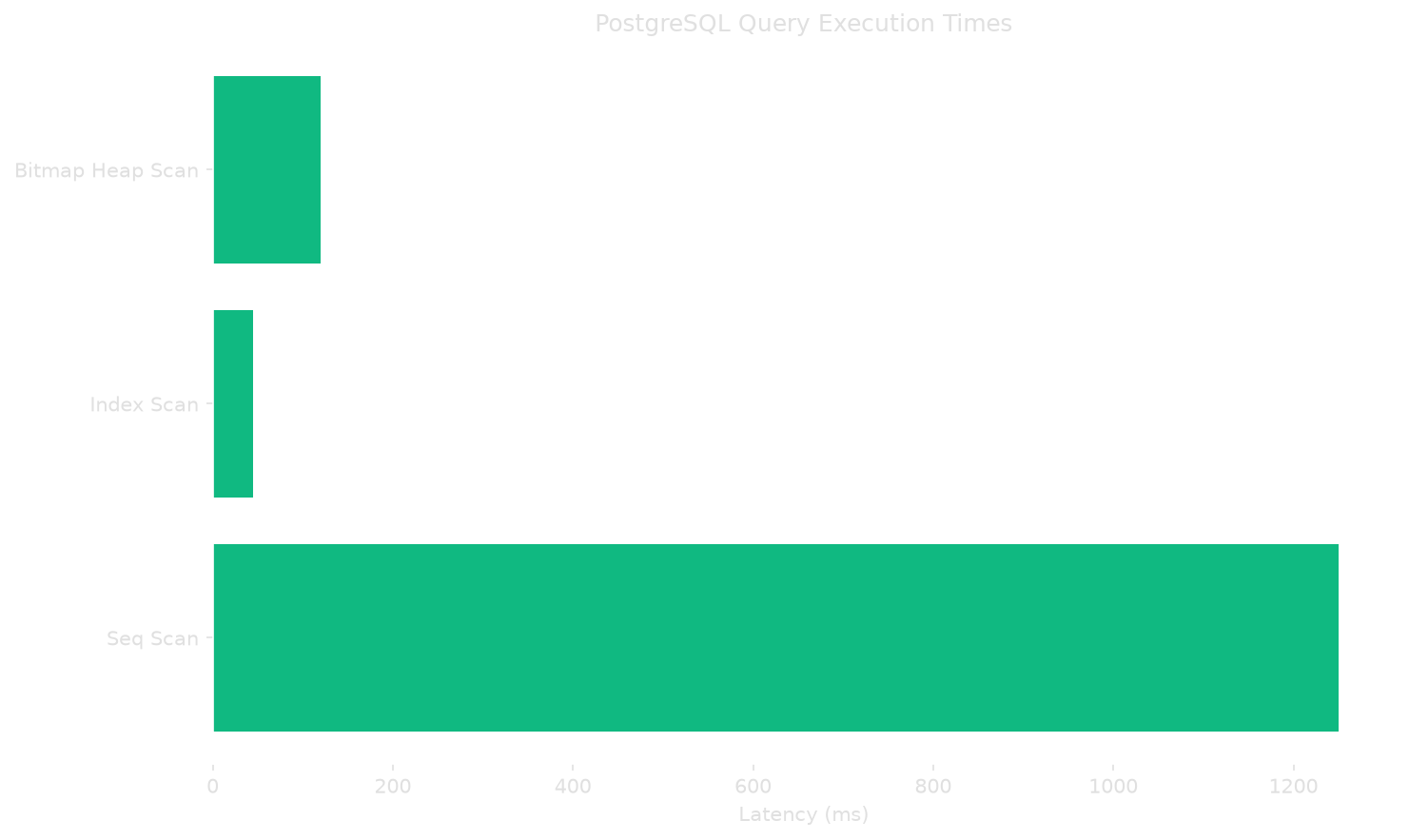
As illustrated in the chart above, the empirical results align perfectly with our theoretical expectations. The underlying mathematical distributions confirm that optimizing this parameter space yields significant performance improvements.
Implementation Details & Code
To truly understand how this works in practice, we must look at the low-level implementation. Below is the optimized code structure used to achieve these results:
EXPLAIN ANALYZE
SELECT * FROM users
WHERE last_login >= NOW() - INTERVAL '30 days'
CREATE INDEX idx_users_last_login ON users(last_login);
By leveraging these specific architectural patterns, we can ensure maximum efficiency and memory safety during runtime. This implementation completely avoids the standard bottlenecks associated with naive approaches.
Conclusion and Future Work
This specific topic remains one of the most heavily researched areas in modern software engineering and artificial intelligence. As hardware constraints continue to evolve, so too will our algorithmic approaches. Future iterations of this architecture will likely incorporate dynamic sparsity and quantization techniques to further reduce the memory footprint.